We Asked AI to Build Websites for 5 Different Businesses. Here's What Happened.
What happens when AI creates websites for different types of businesses? We tested five examples to see where AI helps most in the website creation process.
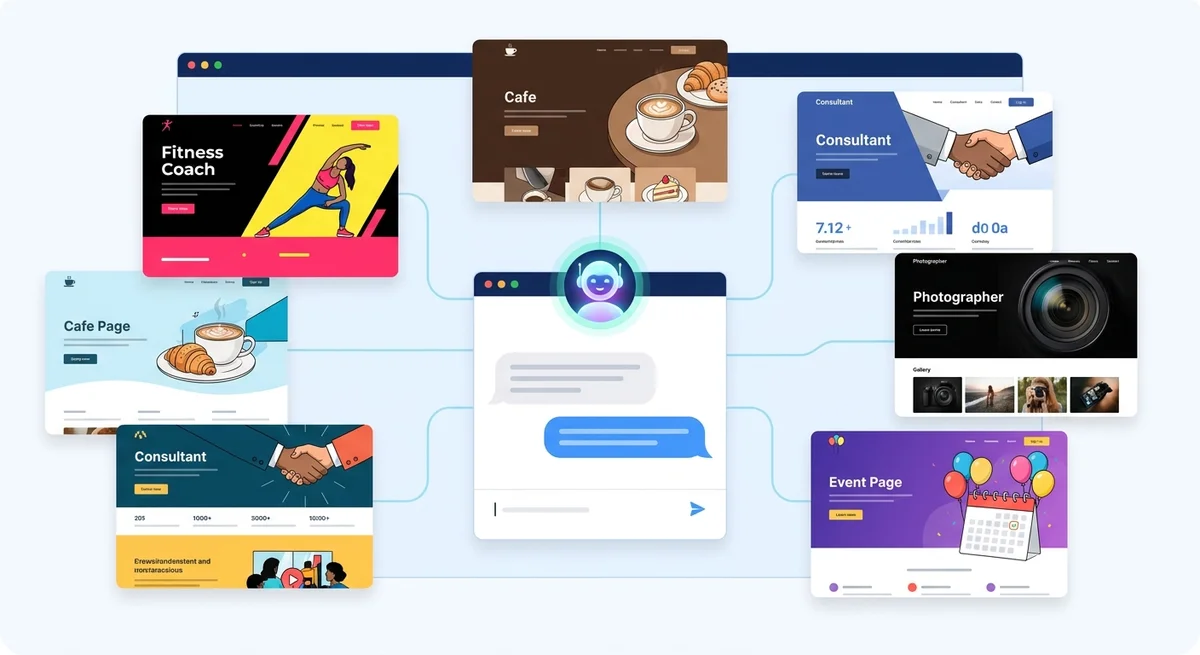
A website can mean very different things depending on the business.
For a coach, it needs to build trust. For a café, it needs to help people visit. For a consultant, it needs to explain value. For a photographer, it needs to show style. For an event, it needs to make people decide quickly.
That is why website creation is harder than it looks. The structure of the page has to match the goal.
So we tested a simple idea: what happens when you give AI a short business description and ask it to create the first version of a website?
Not a perfect final website. Not a brand strategy. Just the first version — the thing that helps you stop staring at a blank page.
Here are five examples.
1. A personal trainer
"I'm a personal trainer helping busy professionals get stronger with simple, realistic workout plans."
The first version should not be a generic fitness page. It needs to speak to people who are short on time and probably tired of extreme fitness messaging.
A strong AI-generated draft might include:
- A headline focused on strength without burnout
- A section explaining the training approach
- Benefits like flexible plans, realistic routines, and accountability
- A simple "Book a consultation" CTA
- A short FAQ about experience level, online coaching, and scheduling
The useful part is that the AI can quickly turn a rough positioning sentence into a homepage structure. The trainer can then refine the tone: more premium, more friendly, more intense, or more beginner-focused.
2. A local café
"Create a website for a cozy neighborhood café that serves specialty coffee, pastries, and weekend brunch."
This website has a different job. It does not need to explain a complex offer. It needs to create a feeling and make practical information easy to find.
A good first draft might include:
- A warm hero section
- Menu highlights
- Opening hours
- Location
- Photos or visual placeholders
- A section for weekend brunch
- Buttons for directions, call, or Instagram
For a local business, clarity is everything. Visitors usually want to know: Are you open? Where are you? What do you serve? Does this place feel right for me?
If the AI gets that structure in place, the owner can focus on details instead of starting from scratch.
3. A business consultant
"I help early-stage founders clarify their offer, improve their messaging, and prepare for growth."
This kind of website needs credibility. It cannot just look nice. It has to communicate outcomes.
A strong first version might include:
- A clear promise in the hero section
- A problem section about unclear positioning
- A services section
- A process section
- Proof points or testimonials
- A call to book a discovery call
The biggest value here is helping the consultant say what they do in a way visitors understand. Many service providers struggle with this. They know their work deeply, but their websites become vague.
AI can help create a sharper first draft. Then the expert can adjust it to make it more accurate.
4. A photographer
"Build a portfolio website for a wedding and lifestyle photographer with a natural, emotional style."
A photographer's website is visual, but the words still matter. The page needs to express style, trust, and the kind of experience clients can expect.
A useful first draft might include:
- A visual hero section
- Portfolio categories
- A short story about the photographer's approach
- Packages or inquiry information
- Testimonials
- A contact form
The AI does not replace the photographer's taste. But it can create the structure around the work, so the portfolio does not feel like a random gallery.
5. An event page
"Create a landing page for a one-day workshop for freelancers who want to improve their online presence."
An event page has one main job: help people decide.
A good first version might include:
- What the event is
- Who it is for
- Date, time, and location
- What attendees will learn
- Speaker or host information
- Ticket CTA
- FAQ
For events, speed matters. The organizer often needs a page quickly, and the information is usually scattered across notes, messages, and planning docs. AI can turn that messy input into a page people can actually use.
What we learned
The most useful part of AI website creation is not that it creates a final masterpiece instantly.
It is that it creates a strong starting point.
That starting point includes structure, copy, sections, and direction. From there, the user can react:
- "Make this more elegant."
- "Add more personality."
- "Remove the long intro."
- "Make the CTA stronger."
- "Add a section for pricing."
- "Make it sound less corporate."
That workflow feels natural because most people are better at responding to a draft than creating from nothing.
AI is not just a shortcut for design. It is a shortcut to clarity.
And for many businesses, that is exactly what the first website needs.
Not perfection.
A first version that is clear enough to improve — and good enough to publish when ready.
Related blogs
Related Post
Expand your knowledge with these hand-picked posts.
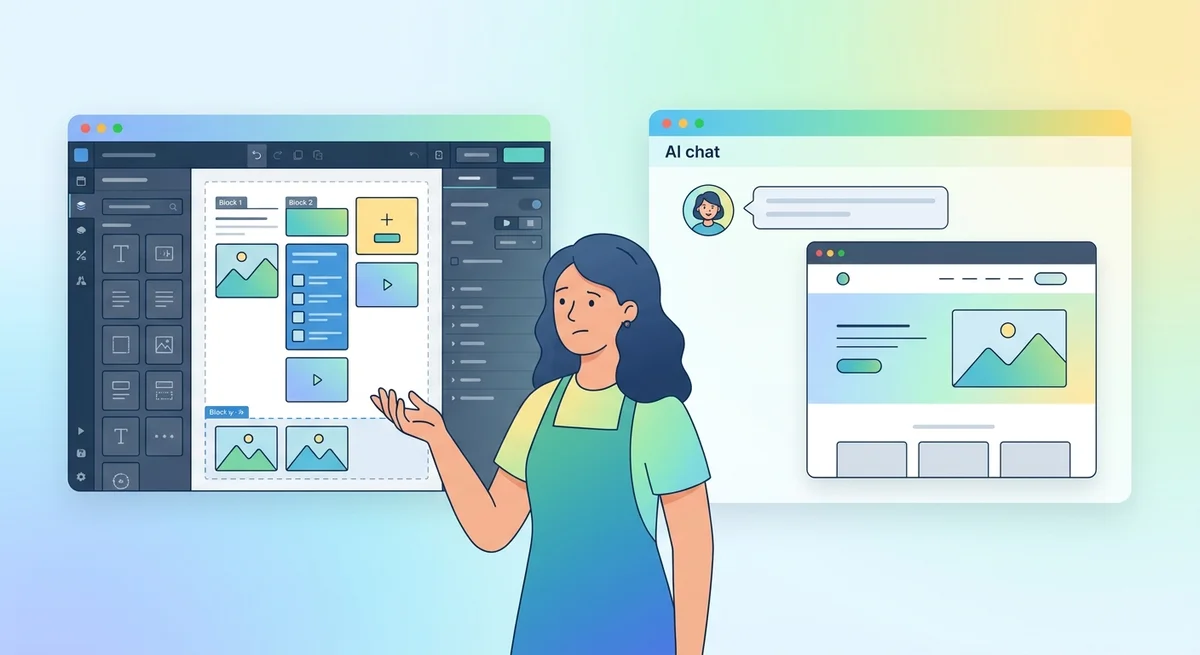
Most People Don't Want a Website Builder. They Want a Website.
Most website builders still ask people to build. But what most users really want is a finished website they can edit, improve, and publish.
Nibemo Team
The Blank Page Is the Real Enemy of Building a Website
The hardest part of creating a website is often not design or code. It is knowing what to say, where to start, and how to turn an idea into a clear page.
Nibemo Team
Templates Are Great Until Your Business Doesn't Fit One
Templates look perfect in demos, but real businesses are messy. Here is why starting from a conversation can work better than forcing your idea into a template.
Nibemo Team
Your website is one sentence away
Describe your business and Nibemo builds it a real, ready-to-publish website in minutes. Free to start - no signup to try.