Templates Are Great Until Your Business Doesn't Fit One
Templates look perfect in demos, but real businesses are messy. Here is why starting from a conversation can work better than forcing your idea into a template.
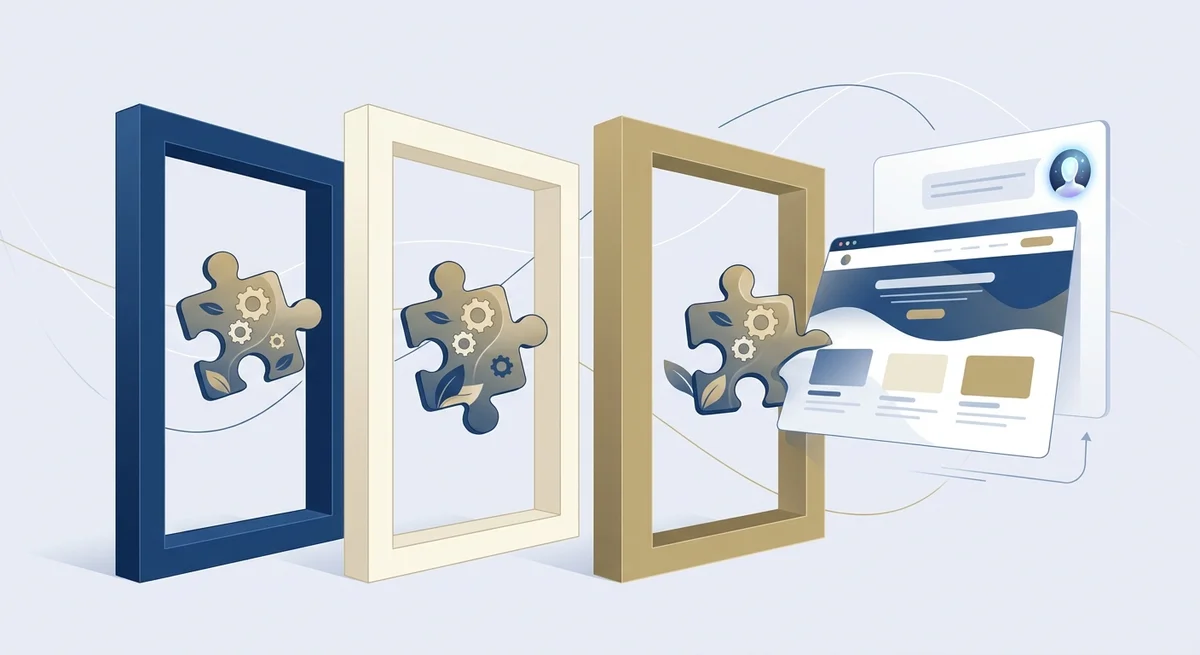
Templates look amazing in demos.
The spacing is perfect. The images match. The headlines are short. The testimonials sound polished. The colors feel intentional. Everything fits.
Then you try to use one for your actual business.
Suddenly, the beautiful template becomes a puzzle.
The hero section has room for a short headline, but your offer needs more explanation. The services section has three cards, but you offer five things. The gallery expects professional photos, but you only have a few phone pictures. The testimonial section looks great, but you are just starting and do not have testimonials yet. The pricing table assumes fixed packages, but your pricing depends on the project.
The template was not bad.
It just was not built around your reality.
That is the hidden problem with templates: they are designed to look complete before they meet your content. But a real website should be shaped around the business, not the other way around.
For some people, templates work well. If your business fits a common structure and you already have strong copy and assets, a template can save time. But many people are not in that position. They have a business, an idea, an event, a service, or an offer that does not fit neatly into the template they picked.
So they start making compromises.
They remove sections they do not understand. They force their text into boxes that are too small. They keep sections they do not need because the design looks empty without them. They use vague headlines because the template headline was vague. They publish something that looks fine but does not really explain what they do.
This is how many websites end up polished but unclear.
The design looks professional. The message does not.
A better process starts with the content and the goal.
- What are you offering?
- Who is it for?
- What should visitors understand first?
- What action do you want them to take?
- What information do they need before they trust you?
- What makes this business different?
Once those answers exist, the layout should follow.
That is why building from a conversation can feel more natural than starting from a template. You describe what you need, and the website takes shape around your idea. The sections are chosen because they make sense for the business, not because they came with a design pack.
A coach may need a strong personal story and a booking CTA. A restaurant may need hours, location, menu highlights, and photos. A consultant may need credibility, outcomes, and a clear service breakdown. An event may need date, venue, schedule, speakers, and registration. A freelancer may need positioning, selected work, process, and contact.
Those are not just design choices. They are communication choices.
The best website is not the one that matches a template perfectly. It is the one that helps a visitor quickly understand what you offer and what to do next.
Templates often start with appearance.
A better website process starts with intent.
That does not mean every website needs to be custom from scratch. Most websites still use familiar patterns: hero, benefits, proof, services, FAQ, CTA. But the content, emphasis, and order should adapt to the user's goal.
This is where AI can change the experience. Instead of browsing templates and wondering which one might fit, the user can explain the business. The AI can create a first version that already has the right kind of structure. Then the user can refine it through conversation.
- "Make it more minimal."
- "Add a section for workshops."
- "Remove pricing."
- "Make the homepage focus on trust."
- "Add a stronger CTA for booking a call."
That is different from forcing a business into a template.
It is shaping a website around the business.
Templates are not going away, and they should not. They are useful visual references. But for many people, the future of website building will not begin with choosing a template.
It will begin with describing what they need.
Because your business should not have to fit the template.
The website should fit your business.
Related blogs
Related Post
Expand your knowledge with these hand-picked posts.
The Blank Page Is the Real Enemy of Building a Website
The hardest part of creating a website is often not design or code. It is knowing what to say, where to start, and how to turn an idea into a clear page.
Nibemo Team
We Asked AI to Build Websites for 5 Different Businesses. Here's What Happened.
What happens when AI creates websites for different types of businesses? We tested five examples to see where AI helps most in the website creation process.
Nibemo Team
Most People Don't Want a Website Builder. They Want a Website.
Most website builders still ask people to build. But what most users really want is a finished website they can edit, improve, and publish.
Nibemo Team
Your website is one sentence away
Describe your business and Nibemo builds it a real, ready-to-publish website in minutes. Free to start - no signup to try.